

Night Vision Vs Thermal Optics: Which Is Better For Your Hunt?
![[HERO] Night Vision Vs Thermal Optics: Which Is Better For Your Hunt?](https://faithandfreedomoutdoors.com/cdn/shop/files/hms5KLJuwzh.webp)
There's something truly special about being out in the field when the sun dips below the horizon. The stars emerge, the nocturnal world awakens, and you find yourself surrounded by a side of God's creation that most people never get to witness. It's a humbling, faith-filled experience that reminds us just how vast and intricate His handiwork truly is. †
But let's be real: hunting in low-light conditions requires the right hunting gear to be effective and safe. That's where the great debate comes in: night vision versus thermal optics. Which technology deserves a spot in your gear bag?
If you've been wrestling with this decision, you're not alone. Both tools have their place, and understanding the strengths of each will help you make a confident, informed choice. Let's break it down together.
Understanding the Two Technologies
Before we dive into the pros and cons, let's get clear on how these two types of scopes actually work. They might seem similar at first glance, but they operate on completely different principles.
How Night Vision Works
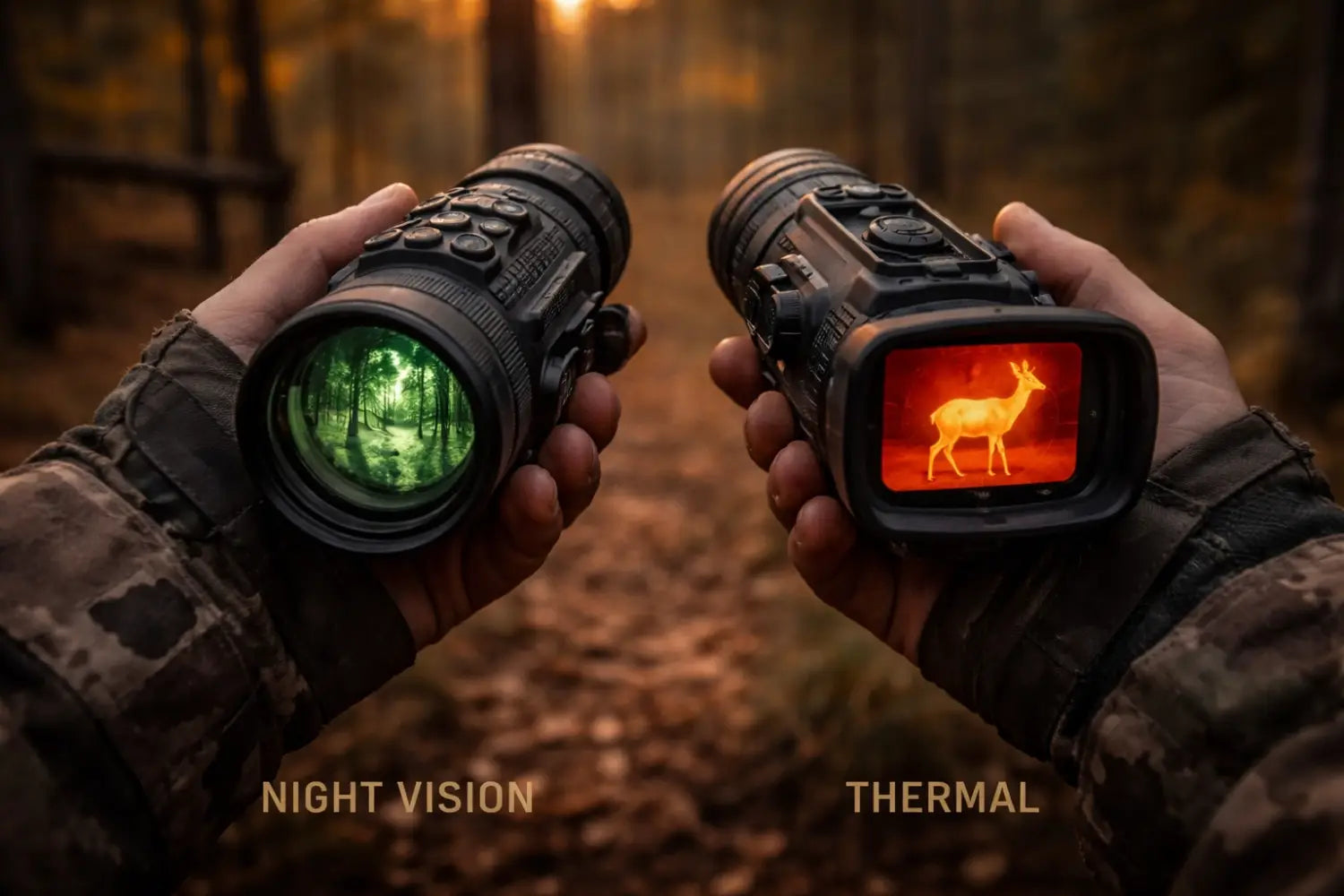
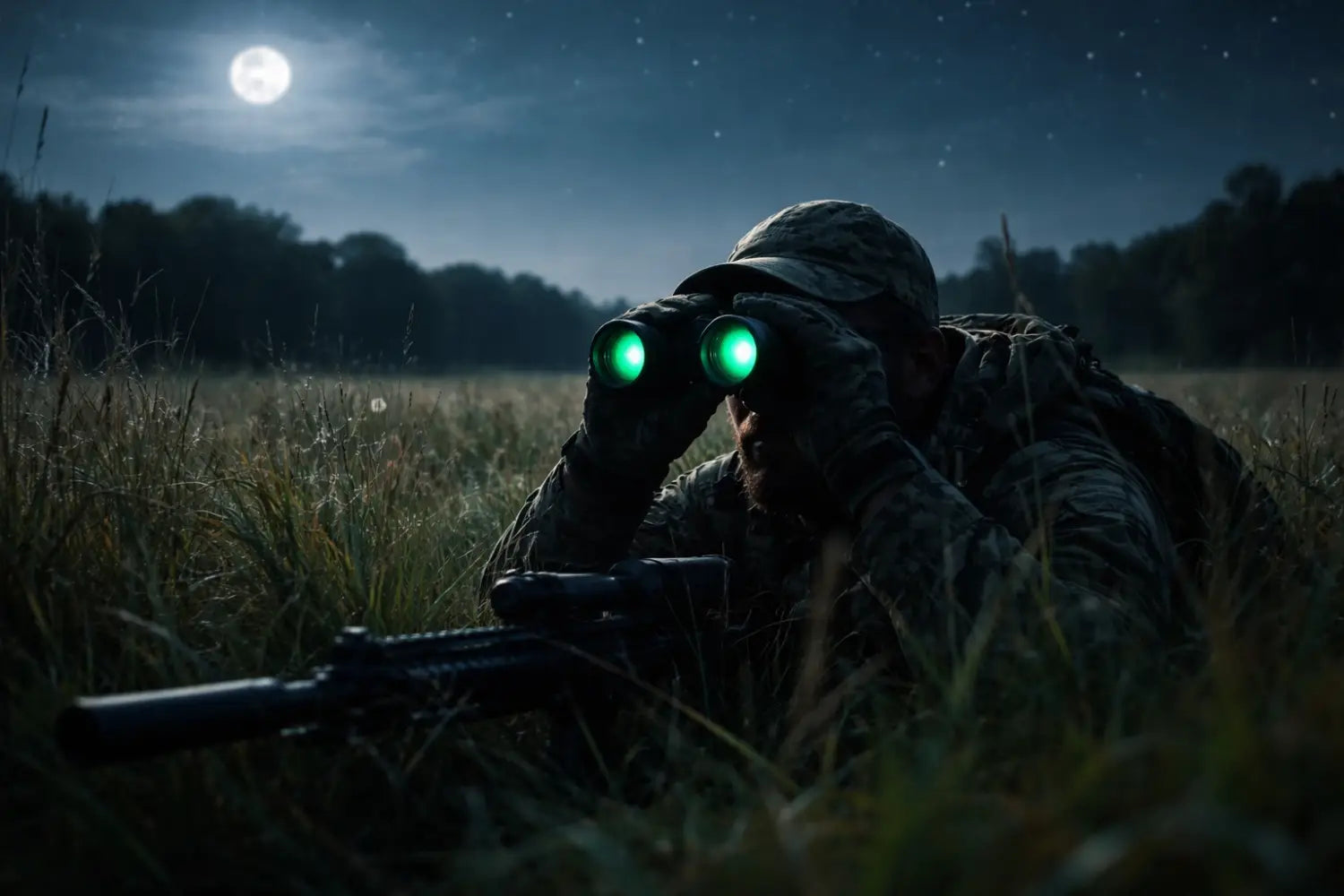
Night vision technology amplifies available light: whether that's moonlight, starlight, or infrared illumination: to create a visible image. Think of it like turning up the brightness on a very dark photograph. The result is a green-tinted (or sometimes white phosphor) image that shows you the landscape in impressive detail.
Night vision devices need at least some ambient light to function properly. On a moonlit night, they perform beautifully. On a pitch-black, overcast evening? They'll need help from an infrared illuminator to reach their full potential.
How Thermal Optics Work
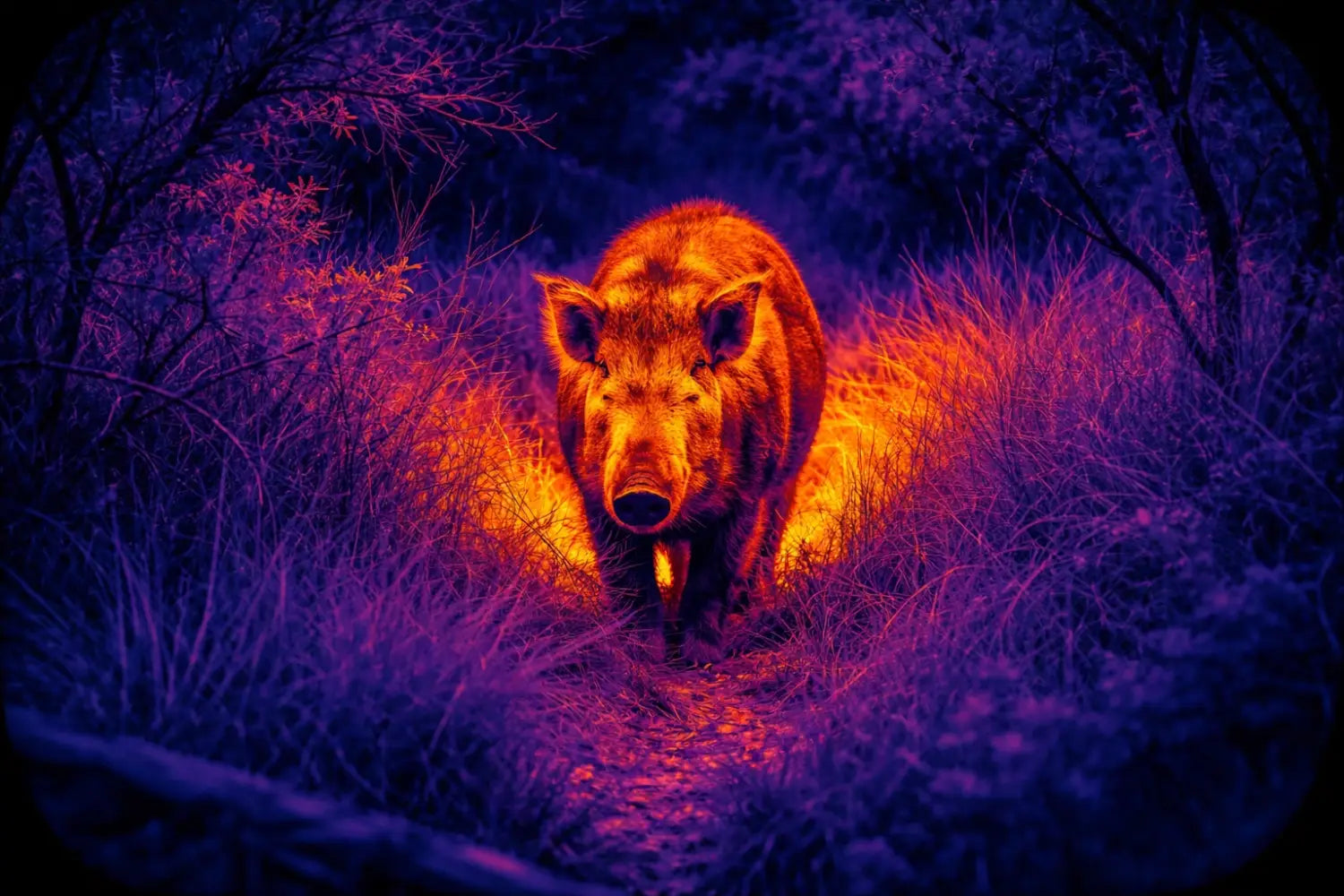
Thermal optics take a completely different approach. Instead of amplifying light, they detect heat signatures. Every warm-blooded animal: from a whitetail deer to a feral hog: radiates thermal energy, and these devices translate that heat into a visible image on your screen.
The beauty of thermal technology is that it doesn't care about light conditions at all. Total darkness, dense fog, thick brush: thermal sees right through it all by picking up on those heat signatures.
The Case for Night Vision
Night vision has been a trusted companion for hunters and outdoorsmen for decades. Here's why it continues to earn its place in the field:
Pros of Night Vision
Budget-friendly options exist. If you're just getting started with nocturnal hunting, night vision offers a more accessible entry point. Quality entry-level models can be found for under $500, making it easier to gear up without breaking the bank.
Detailed imagery in good conditions. When you've got decent ambient light, night vision provides excellent detail. You can identify targets clearly, read the terrain, and navigate with confidence. Background details really come through, which helps with situational awareness.
Longer battery life. Generally speaking, night vision devices consume less power than thermal units. This means extended hunts without worrying about your optics dying at a critical moment.
Familiar, natural-looking images. The imagery from night vision feels intuitive. You're essentially seeing the world in enhanced monochrome, which many hunters find easier to interpret quickly.
Cons of Night Vision
Light-dependent performance. On completely dark nights without any moonlight, night vision struggles without an IR illuminator: and that illuminator can potentially spook game that's sensitive to infrared light.
Limited ability to see through obstacles. Dense vegetation, tall grass, and brush can all obstruct your view. Night vision shows you what's visible, not what's hidden.
Shorter detection range. Compared to high-end thermal units, night vision typically offers more limited range for detecting targets at distance.
The Case for Thermal Optics
Thermal technology has revolutionized nighttime hunting over the past decade. Here's what makes it such a powerful tool:
Pros of Thermal Optics
Works in total darkness. Zero ambient light? No problem. Thermal optics rely solely on heat signatures, so they perform just as well on the darkest nights as they do under a full moon.
Sees through obstacles. This is a game-changer. Thermal can detect animals hiding in tall grass, behind light brush, or obscured by fog and smoke. That hog bedded down in thick cover? Thermal will find him.
Exceptional detection range. High-quality thermal scopes can detect warm-blooded animals at 1,000 yards or beyond. When you're scanning large fields or open country, that range advantage is invaluable.
Tracks wounded game. Here's something many hunters don't consider: thermal optics can pick up blood trails and help you locate wounded animals by detecting residual body heat. It's an ethical advantage that honors the animal and the hunt.
No external light source needed. Unlike night vision with an IR illuminator, thermal is completely passive. You won't risk spooking wary predators or alert game to your presence.
Cons of Thermal Optics
Higher price point. Quality thermal optics represent a significant investment. You're paying for cutting-edge technology, and the price tag reflects that.
Less environmental detail. While thermal excels at detecting animals, it doesn't show you the landscape the way night vision does. Background features appear as temperature variations rather than recognizable terrain.
Heavier battery consumption. Thermal devices tend to draw more power, which means shorter battery life and the need to carry spares on longer hunts.
When Should You Choose Each?
Now for the practical question: which technology fits your hunting style?
Choose Night Vision If You:
- Hunt on a budget and want quality optics without a massive investment
- Typically hunt in areas with decent moonlight or starlight
- Prefer detailed terrain imagery for navigation and target identification
- Hunt at closer ranges where night vision's clarity shines
- Want longer battery life for extended sits
Choose Thermal Optics If You:
- Hunt in areas with dense vegetation, fog, or challenging terrain
- Need maximum detection range for scanning large properties
- Want the ability to locate game in complete darkness
- Value the ethical advantage of tracking wounded animals
- Hunt predators that are sensitive to IR illumination
The Best of Both Worlds: A Hybrid Approach
Here's a little secret that experienced night hunters have figured out: you don't necessarily have to choose just one.
Many seasoned outdoorsmen use a hybrid approach: scanning wide areas with a thermal monocular to locate targets at distance, then switching to night vision scopes for precise target identification and shot placement. It's the best of both worlds, and it maximizes your effectiveness in the field.
If you're serious about nocturnal hunting, consider building your hunting gear kit to include both technologies over time. Start with whichever fits your current needs and budget, then expand as you grow in experience.
Experience His Creation After Dark
Beyond the tactical advantages, there's something deeply meaningful about spending time in the wilderness at night. When you're equipped with the right optics, you get to witness a world that operates while most people sleep. Owls gliding silently through the trees. Coyotes on the prowl. The subtle movements of deer at the field's edge.
It's a reminder that God's creation never truly rests: and that there's always more to explore, more to discover, and more reasons to stand in awe of His design. † These tools don't just make us better hunters; they open windows into the full scope of the natural world He's given us stewardship over.
Gear Up with Confidence
Whether you're leaning toward night vision, thermal optics, or both, the key is choosing quality equipment that performs when it matters most. At Faith & Freedom Outdoors, we carry a selection of high-quality optics and accessories designed for hunters who take their craft seriously.
Embrace the adventure. Deepen your connection to the land. And let your next hunt be guided by faith, preparation, and the right gear for the job. †
We believe the outdoors is where faith and freedom come alive. Join us on the journey: and see what's waiting for you after dark.