

A wilderness retreat isn’t just a night outside: it’s a reset. It’s trading noise for wind in the pines, trading hurry for holy hush. When we step away from screens and schedules, we make room to listen. We believe the outdoors has a way of re-centering the spirit and strengthening the soul: faith-fueled and freedom-forward †.
But a retreat that feels unforgettable also needs to be livable. Not complicated. Not overloaded. Just smart essentials that protect your body so your mind can settle: and your heart can open.
Below are five camping gear essentials that build a solid foundation for safe, comfortable, and meaningful time in the wild. Pack these well and you’ll spend less time “managing camp” and more time embracing creation, deepening gratitude, and exploring with confidence.
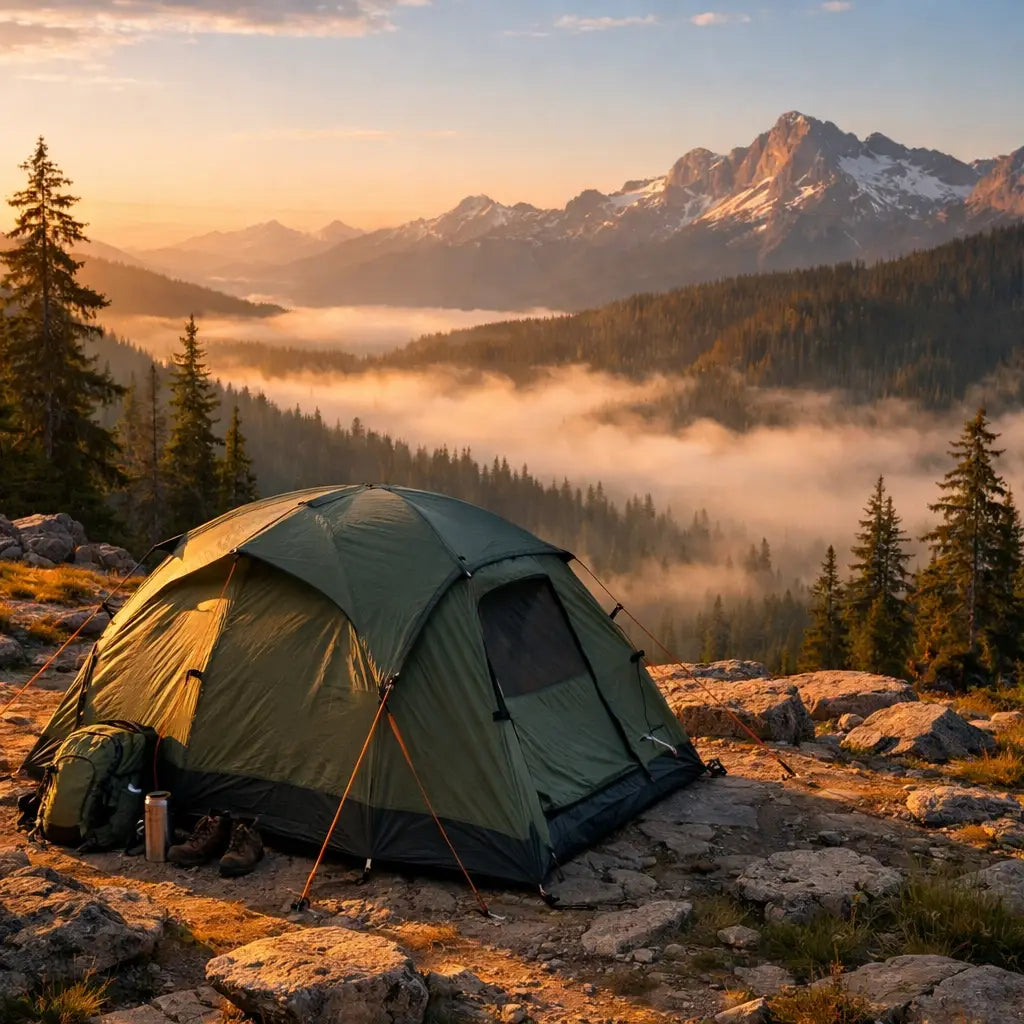
1) Shelter: A Tent That Stands Strong When Weather Shifts
A tent is more than fabric and poles: it’s your basecamp, your barrier, your little refuge in the wilderness. When the wind rises or rain rolls in, a trustworthy shelter turns “survival mode” into “rest mode.”
What to look for
-
Season rating that matches your mission
- 3-season tents handle most spring/summer/fall trips.
- 4-season tents are built for harsher wind, colder temps, and unpredictable mountain weather.
-
A footprint + quality stakes
- A footprint protects the tent floor from abrasion and adds a layer against moisture.
- Stakes matter more than most people realize: soft ground, rocky ground, gusty conditions… your shelter depends on them.
-
Ventilation
- Condensation is the silent comfort-killer. Mesh panels, vents, and smart rainfly design keep air moving.
Faith & Freedom tip
Before you pitch the tent, pause. Take one slow breath and let your shoulders drop. You’re not just setting up camp: you’re setting apart time. Let it be intentional, guided by faith †.
2) Sleep System: A Sleeping Bag Rated for Reality (Not Wishful Thinking)
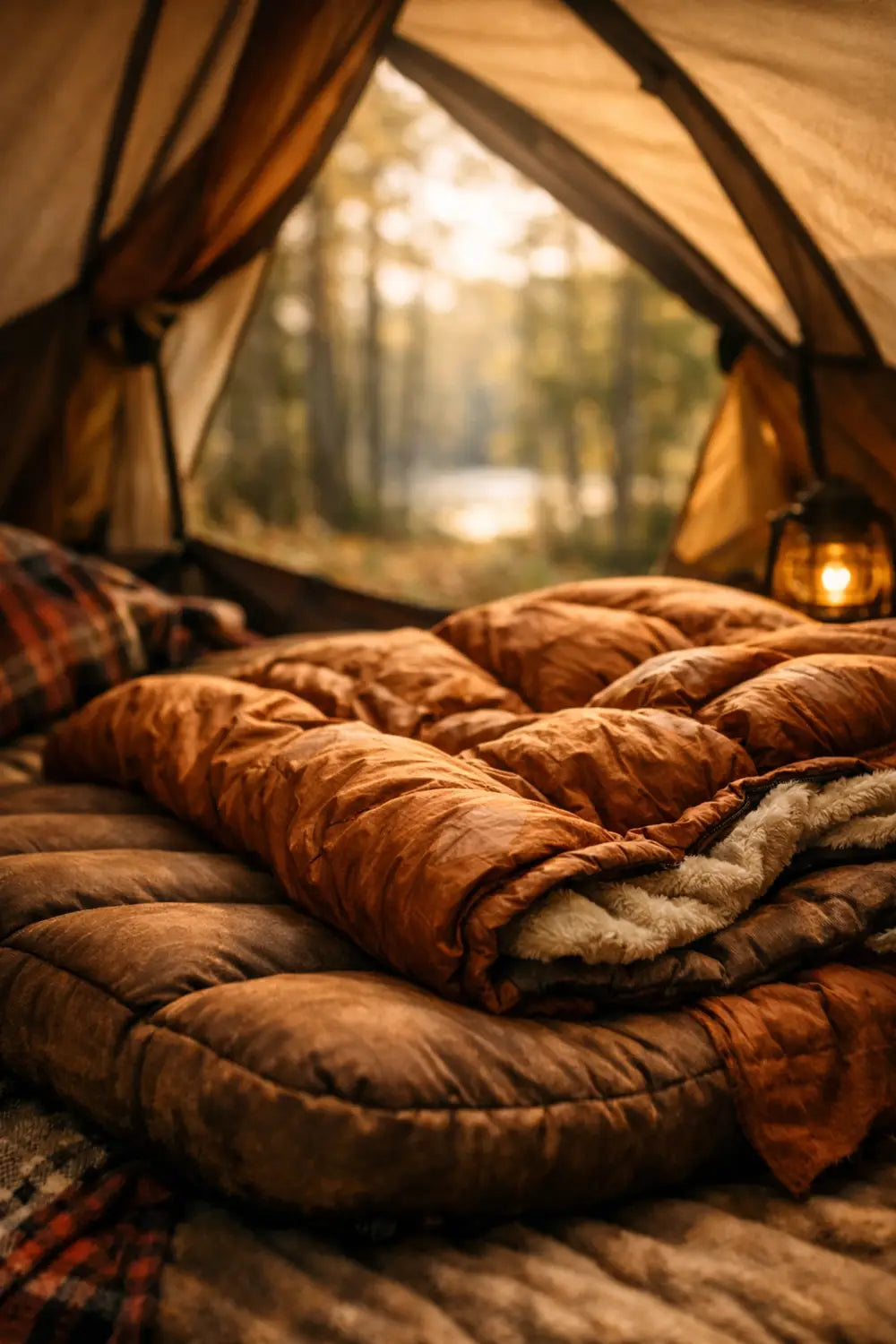
If your sleep is cold and broken, your retreat becomes a grind. A solid sleeping bag is the difference between waking up restored versus waking up wrecked.
The big idea: temperature rating
Sleeping bag ratings can be optimistic. Choose based on where you’ll be and what you actually experience at night.
- If nighttime lows might hit 35°F, consider a bag rated 20–30°F for a comfort buffer.
- If you sleep cold, size up your insulation or rating even more.
Down vs. synthetic (simple breakdown)
- Down: lighter, packs smaller, very warm: but loses performance when soaked.
- Synthetic: bulkier, but handles moisture better and is often more budget-friendly.
A few practical add-ons (worth it)
- Stuff sack + storage bag: compress on trail, store loose at home to preserve loft.
- Dry bag: in wet seasons, keep your bag protected. A dry sleeping bag is peace of mind.
Faith & Freedom mindset
Rest is not weakness: it’s wisdom. Even in the wilderness, we’re designed to recover. When you sleep well, you hike with purpose, lead with patience, and listen more clearly to what the Lord is pressing on your heart †.
3) Sleeping Pad: Comfort and Insulation (Don’t Skip It)
A lot of campers invest in a good bag… then sleep directly on a thin pad and wonder why they’re freezing.
Here’s the truth: the ground pulls heat from you fast. A sleeping pad isn’t a luxury: it’s insulation.
What to look for
-
R-value (insulation rating)
- For mild conditions, R 2–3 can work.
- For shoulder seasons or colder nights, consider R 3.5–5+.
-
Thickness and support
- Around 3 inches of loft can be a game-changer for comfort, especially side sleepers.
-
Pack size
- Backcountry? Smaller and lighter matters.
- Car camping? Comfort wins. Bring the thicker pad.
Pro tip: layer if needed
In cold weather, you can layer a closed-cell foam pad under an inflatable pad for extra warmth and redundancy.
Faith & Freedom reflection
There’s something humbling about laying down under a sky full of stars. A good pad helps your body relax so your spirit can soak in the moment: grateful, unreservedly present, and steady †.
4) Lighting: A Headlamp That Keeps You Safe, Hands-Free, and Ready
When darkness drops, everything changes: setting up camp, cooking, navigating a trail, finding gear, handling emergencies. A headlamp is the simplest way to keep moving confidently without tying up your hands.
The non-negotiables
-
Hands-free beam
- Cooking, fire prep, tent setup: headlamps make all of it easier.
-
Extra batteries (or a backup power plan)
- Don’t gamble with “I think it’ll last.”
-
Multiple modes
- Low mode preserves night vision.
- Red mode is great around camp and keeps bugs calmer.
- A brighter mode helps on trails and in emergencies.
Practical camp safety
- Keep your headlamp in the same pocket every time so you can find it in the dark.
- If you wake up in the night, clip it to your tent ceiling or stash it in the same spot by your head.
Faith & Freedom encouragement
Light changes everything. Even a small beam pushes back a lot of darkness. Let that be a quiet reminder: we don’t need to see the whole trail: just the next step, guided by faith †.
5) Navigation + Repair Tools: Don’t Just Explore: Explore Prepared
A wilderness retreat is about freedom, but freedom isn’t careless. It’s empowered. It’s prepared. It’s knowing you can handle the unexpected without panic.
This fifth essential is a two-part powerhouse: navigation tools and a repair/multi-tool kit. Together, they keep small problems from turning into big ones.
A) Navigation: Know where you are (and where you’re going)
Even if you rely on a GPS or phone app, bring a backup mindset.
-
Offline maps
- Download maps before you lose service.
-
Compass
- Lightweight, reliable, and doesn’t need a battery.
-
Basic route plan
- Know key landmarks, trail junctions, water sources, and turnaround times.
Quick rule we live by: If you can’t explain your route to a friend in two minutes, simplify the plan.
B) Multi-tool/knife + micro repair kit: Your camp problem-solver
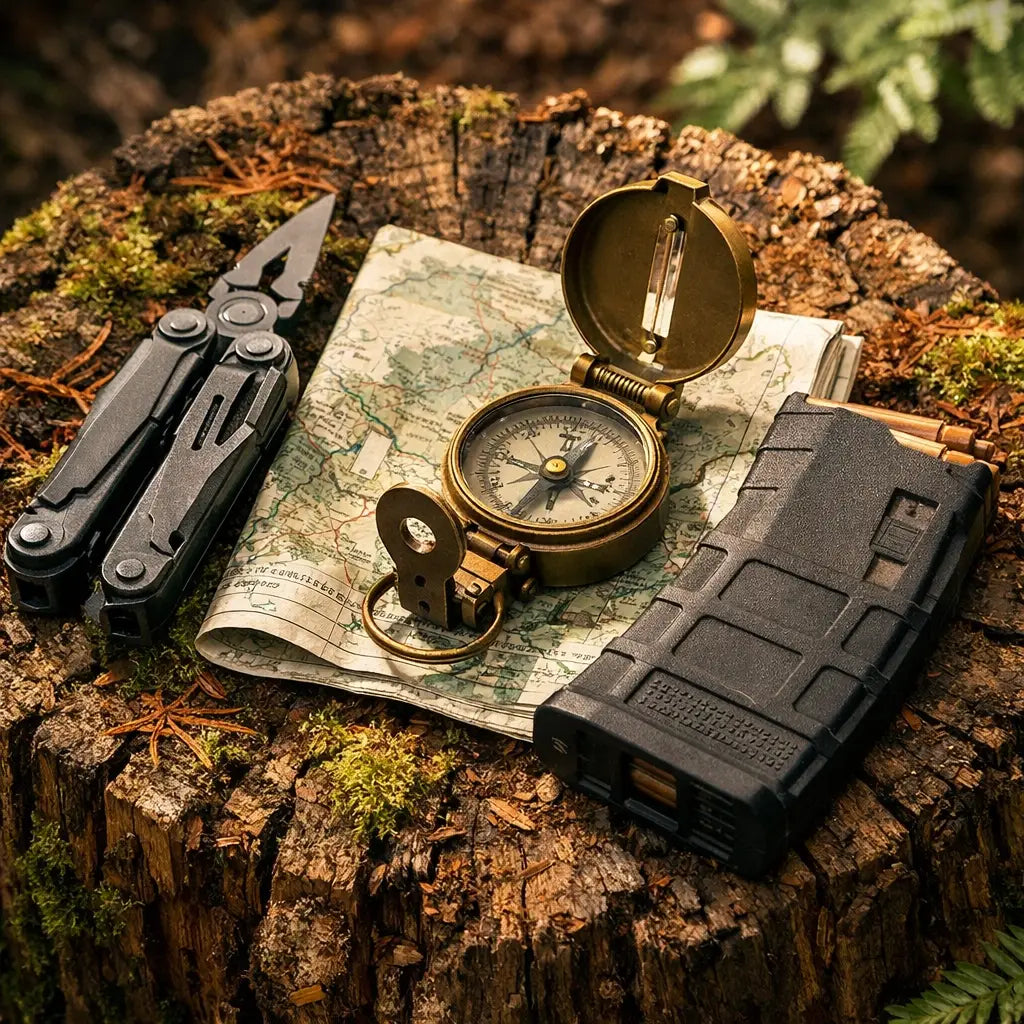
A sturdy multi-tool or knife earns its place fast: food prep, cord cutting, quick fixes, gear adjustments.
Pair it with a small repair kit:
- Duct tape (wrap some around a lighter or trekking pole)
- Cordage/paracord
- Gear repair tape (for tents, rainflies, pads)
- A couple safety pins
- A small needle + strong thread
- A lighter/fire starter
These are tiny items that save trips.
Where firearms accessories fit in (responsibly and practically)
If your retreat includes backcountry hunting or you’re in areas where lawful protection is part of your plan, reliability matters. We believe in responsible stewardship: safe handling, secure storage, and gear that works when it counts †.
Two practical add-ons for hunters and backcountry defenders:
- Quality magazines: dependable feeding, durable construction, field-proven performance (many of our customers love Magpul-style reliability).
- Trusted ammunition: consistency matters: whether you’re training, hunting, or keeping a backcountry sidearm ready.
If you want to browse what we carry across camping essentials, hunting gear, and firearms accessories, explore our store here: https://faithandfreedomoutdoors.com
And if you’re tightening up your hunting kit overall, this pairs well with today’s topic: https://faithandfreedomoutdoors.com/blogs/news/7-hunting-gear-mistakes-youre-making-and-how-to-fix-them
Putting It All Together: The “5 Essentials” Retreat Checklist
Use this quick list before you roll out:
-
Shelter
- Tent + footprint + stakes + rainfly
-
Sleep system
- Sleeping bag rated for your lows + dry protection
-
Sleeping pad
- Right R-value + comfort thickness
-
Lighting
- Headlamp + extra batteries (or backup)
-
Navigation + repair
- Offline map/compass + multi-tool + mini repair kit
When these five are locked in, the rest becomes optional: camp chair, coffee kit, extra comforts. Nice, but not necessary.
One last Faith & Freedom reminder
The wilderness doesn’t demand perfection: it invites presence. Prepare well, pack smart, and then let go of the noise. Step into the quiet with courage. Let creation preach without words. Let your retreat be faith-filled and freedom-led †.
Join our journey( out there, together.)