

7 Mistakes You're Making with Gun Magazines (and How to Fix Them)
![[HERO] 7 Mistakes You're Making with Gun Magazines (and How to Fix Them)](https://faithandfreedomoutdoors.com/cdn/shop/files/xwTCiZeVhGY.webp)
Look, we talk a lot about faith and preparedness around here. But here's the hard truth: all the faith in the world won't help you if your magazine fails when it matters most. Your firearm is only as reliable as its weakest link, and more often than not, that weak link is the magazine.
I've seen it happen at the range, on hunts, and in competitions. A perfectly good rifle or pistol suddenly won't feed because someone made one of these seven mistakes. The good news? They're all fixable. Let's dive in.
Mistake #1: Buying Cheap, No-Name Magazines
The Problem: We've all been tempted by those bargain-bin magazines at gun shows or online. Five mags for the price of one Magpul? Sounds like a deal, right? Wrong.
Cheap magazines are built with inferior materials, loose tolerances, and questionable quality control. Their feed lips spread after a few uses. Their springs lose tension fast. Their followers bind up. When you need them most, they'll let you down.
The Fix: Invest in quality magazines from proven manufacturers. Magpul PMAGs have earned their reputation for a reason, they're durable, reliable, and backed by real-world testing. Yes, they cost more upfront, but consider it stewardship of your resources. Buy once, cry once. A quality magazine is an investment in your preparedness and peace of mind.
Think of it this way: you wouldn't build your house on a cracked foundation. Don't trust your safety to magazines that can't hold up under pressure.
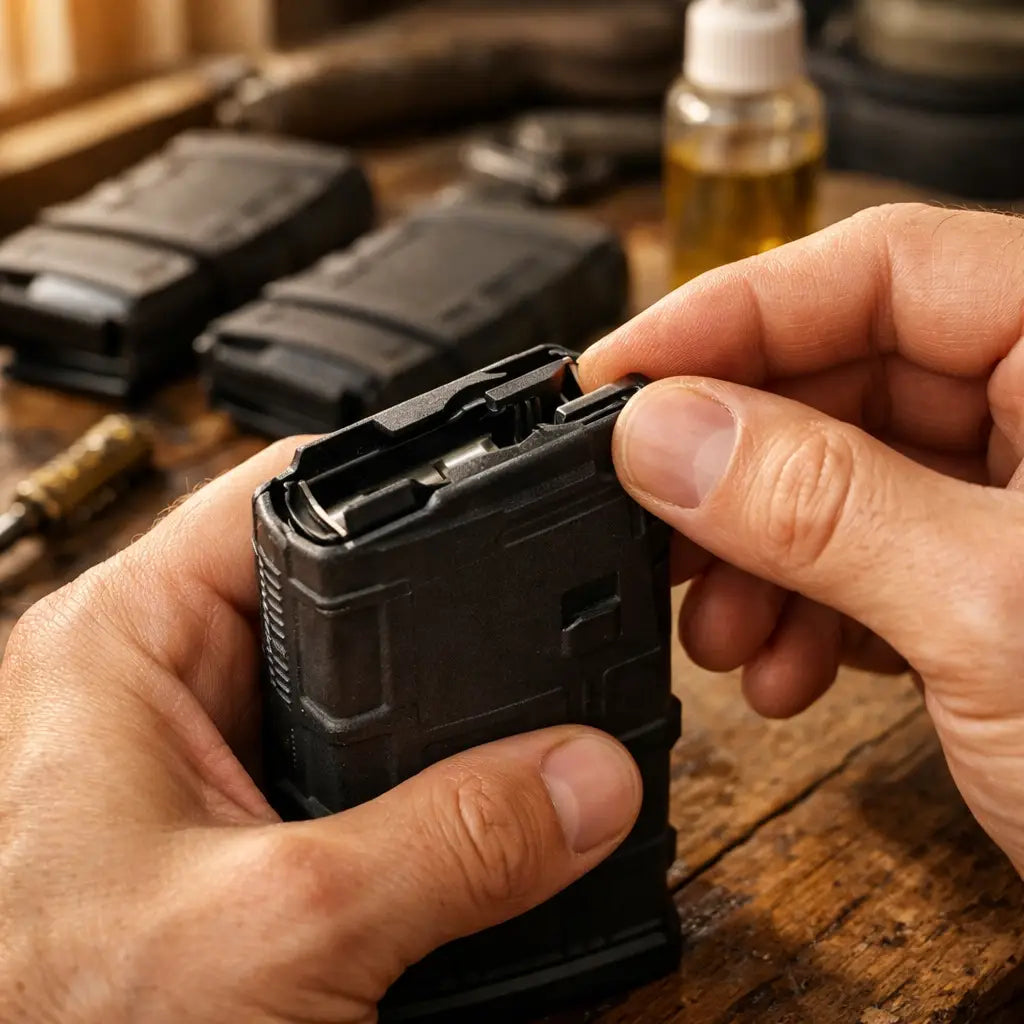
Mistake #2: Never Actually Testing Your Magazines
The Problem: You bought magazines, loaded them up, and stuck them in your safe or range bag. But have you actually tested them? Fired hundreds of rounds through each one to verify they work?
Too many people assume their magazines will work when needed. That's hope, not preparedness. Hope isn't a strategy.
The Fix: Test every single magazine you own. Take them to the range and run them hard. Load them, shoot them, reload them. Drop them in the dirt. Get them wet. See which ones feed flawlessly and which ones cause malfunctions.
Mark your reliable magazines clearly: many shooters use colored tape or numbered stickers. These become your carry or duty magazines. The ones that fail testing? Demote them to training use or replace them entirely.
This is practical faith in action †: trusting God while doing your part to be prepared. Test, verify, and know your equipment.
Mistake #3: Ignoring Magazine Maintenance
The Problem: Magazines aren't maintenance-free. Springs lose tension over time. Feed lips can bend or spread, especially if you drop loaded magazines on hard surfaces. Dirt, carbon, and debris accumulate inside. The follower can drag or stick.
But most people never inspect their magazines until something goes wrong.
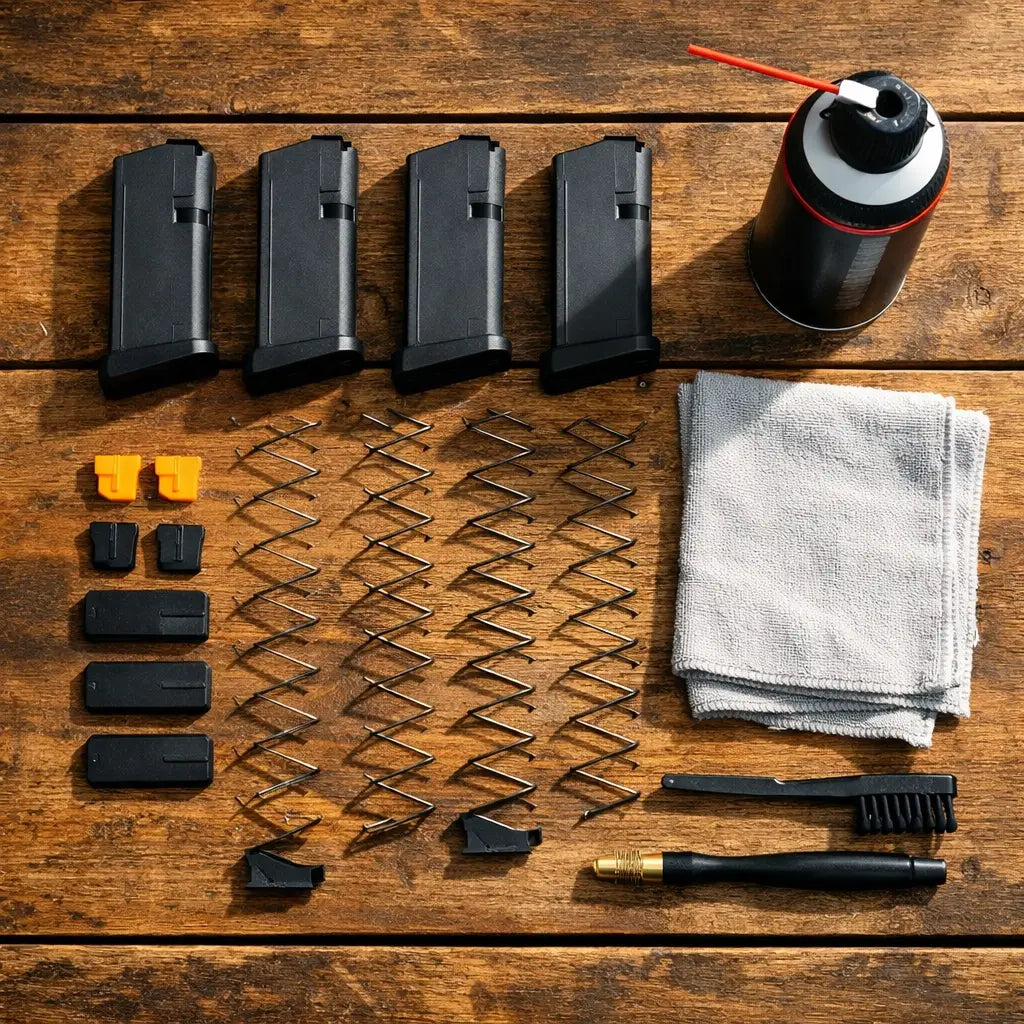
The Fix: Establish a regular inspection and cleaning schedule. At minimum, inspect your magazines every few months:
- Check feed lips for cracks, bends, or spreading
- Look for rust or corrosion on metal components
- Verify the spring still has good tension
- Ensure the follower moves freely without binding
- Clean out dirt and debris with compressed air
For polymer magazines like Magpul PMAGs, disassembly is usually simple. Break them down occasionally, wipe everything clean, and reassemble. Replace springs every few years if you shoot regularly.
Your magazines deserve the same care and attention you give your firearms. It's stewardship: taking care of the tools God has provided for your defense and provision.
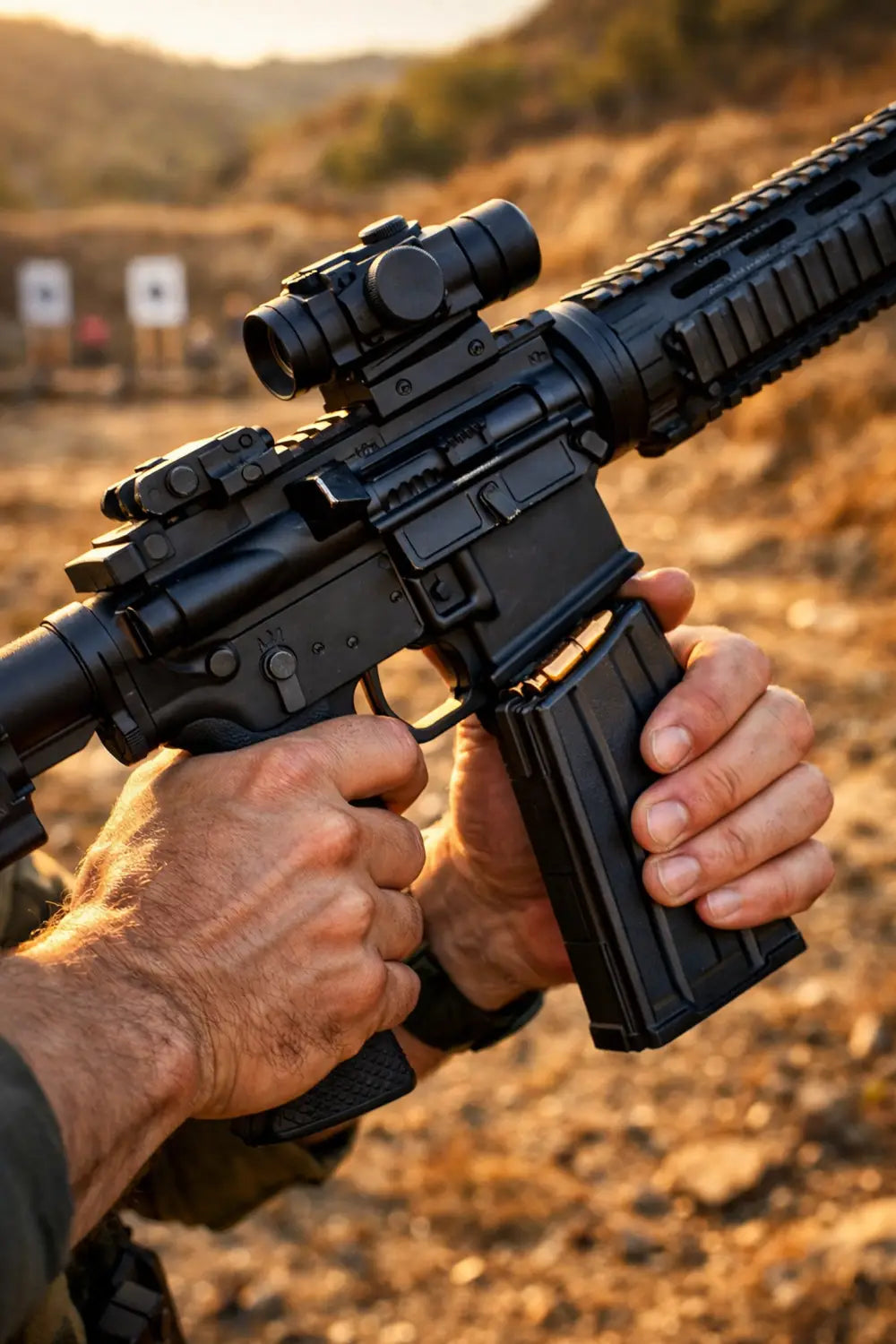
Mistake #4: Loading Your Magazines Wrong
The Problem: Believe it or not, people load magazines backward, putting rounds in nose-down or even reversed. Others slam rounds into place so hard they damage feed lips. Some never load magazines to capacity because they heard it's bad for springs (more on that later).
Improper loading technique causes unnecessary wear and can lead to feeding issues.
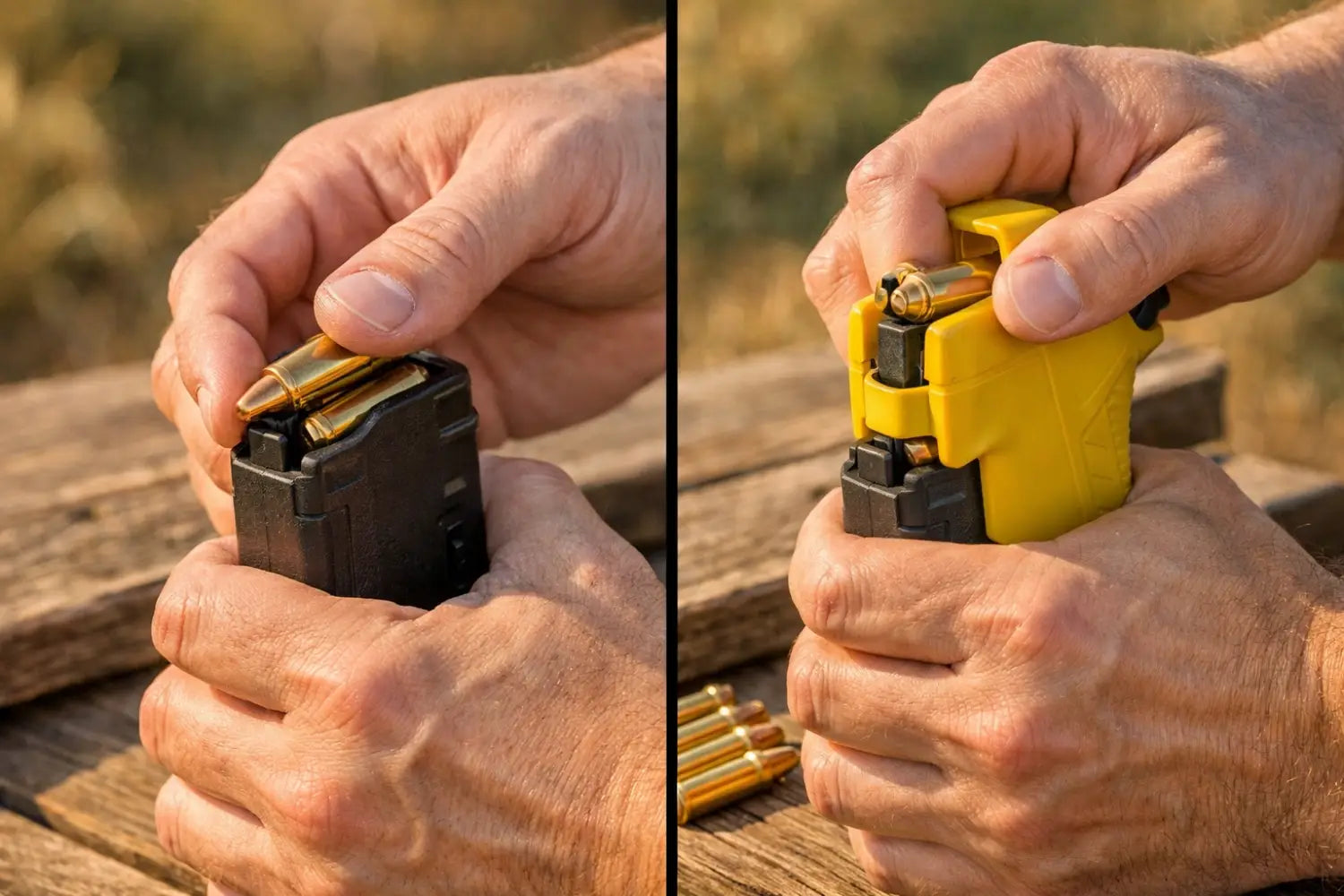
The Fix: Learn the proper technique. Hold the magazine in your non-dominant hand with your thumb behind it for support. Use your dominant hand to load rounds one at a time, pressing down and back until the round slides beneath the feed lips.
Always double-check the bullet's nose points forward before loading each round. Sounds obvious, but in low light or under stress, mistakes happen.
If you load a lot of magazines, invest in a quality speed loader like the Magpul or Caldwell UpLULA. These tools make loading faster, easier, and reduce hand fatigue. They also help prevent damage to both your magazines and your thumbs.
Loading magazines correctly is about attention to detail: the same mindset that guides everything we do at Faith & Freedom Outdoors †. Excellence in the small things prepares you for the big moments.
Mistake #5: Never Rotating Your Defensive Ammo
The Problem: You loaded your carry magazines three years ago and they've been sitting ever since. The problem? That top round has been under constant spring pressure all that time. Bullet setback becomes a real concern: each time you chamber and un-chamber that same round, the bullet gets pushed deeper into the case, increasing pressure to potentially dangerous levels.
Plus, ammunition can degrade. Primers can lose sensitivity. Powder can absorb moisture in humid environments.
The Fix: Rotate your defensive ammunition regularly. Here's a simple system:
Every three to six months, unload your carry magazines. Shoot the top three to five rounds at the range. Reload those magazines with fresh defensive ammunition. Use the older rounds for practice.
This ensures your carry ammo stays fresh and you never repeatedly chamber the same round. It also gives you an excuse to test your defensive loads periodically and verify they still feed reliably.
This is practical preparedness meeting faithful stewardship. You're not wasting ammunition: you're ensuring what you carry will work when your life depends on it.
Mistake #6: Failing to Properly Seat Your Magazines
The Problem: You'd be surprised how many malfunctions come from magazines that aren't fully seated in the firearm. People insert magazines tentatively, don't push them in all the way, or forget to tug down to verify lockup.
An improperly seated magazine is one of the most common causes of failure-to-feed malfunctions.
The Fix: Develop a consistent habit every single time you insert a magazine:
- Insert the magazine firmly with authority (not violently, but confidently)
- Listen and feel for the positive click of the magazine catch
- Tug down on the magazine to verify it's locked in place
- On AR-15 platform rifles, some shooters tap the bottom of the magazine after insertion to ensure full seating
Make this a ritual: something you do the same way every time without thinking. Consistency builds reliability.
This mirrors our walk of faith †: we don't just casually show up. We fully commit, verify our foundation is solid, and move forward with confidence.
Mistake #7: The Great Spring Debate (You're Probably Doing It Wrong)
The Problem: There's endless debate about whether keeping magazines loaded weakens springs. Some people never load magazines to full capacity because they heard it damages springs. Others download by one or two rounds "just to be safe."
Here's the truth: springs wear out from compression and decompression cycles, not from being stored compressed. Constantly loading and unloading magazines wears springs faster than leaving them loaded. But leaving them completely unloaded for extended periods can also cause issues: springs need to be exercised occasionally.
The Fix: Here's the balanced approach:
- Load your duty/carry magazines to full capacity and leave them loaded
- Rotate which magazines you use at the range so all magazines get exercised periodically
- Replace springs in high-use magazines every 2-3 years or after thousands of rounds
- For long-term storage magazines (think emergency preparedness), load them to about 90% capacity and inspect annually
Magpul PMAGs, for example, are designed to stay loaded at full capacity indefinitely. The company has tested this extensively. Trust the engineering, but also inspect regularly.
This is about wisdom and balance: pushing our equipment to its design limits while being prepared to maintain and replace components as needed. It's the practical application of faith-driven preparedness †.
The Bottom Line: Reliability Starts With You
Your magazines are the lifeline between your firearm and your ammunition. Treat them with the respect they deserve. Invest in quality, test regularly, maintain consistently, and use them correctly.
At Faith & Freedom Outdoors, we believe preparedness is an act of faith †: trusting God while doing everything in our power to be ready for whatever comes. Your magazines are a critical part of that equation.
Don't wait for a malfunction to teach you these lessons the hard way. Start today: inspect your magazines, test them at the range, and fix any issues you find. Your future self will thank you.
Remember: we're not just preparing for uncertainty. We're honoring the responsibility that comes with the freedom we hold dear. That starts with the details, with the magazines that make our firearms function when it matters most.
Stay prepared. Stay faithful. And keep your magazines running right.
Explore quality magazine options and more at Faith & Freedom Outdoors and join our community of faith-fueled, prepared Americans who refuse to compromise on quality or conviction.