

7 Ammo Storage Mistakes You're Making (and How Faith-Based Shooters Can Fix Them)
![[HERO] 7 Ammo Storage Mistakes You're Making (and How Faith-Based Shooters Can Fix Them)](https://faithandfreedomoutdoors.com/cdn/shop/files/pKdPYPoKo7K.webp)
As faith-filled shooters, we understand that every tool God has placed in our hands: from our firearms to our ammo: deserves proper care and respect. It's not just about being responsible; it's about being good stewards † of the gear we've been blessed with.
But here's the thing: even the most dedicated among us can fall into some pretty common ammo storage traps that compromise reliability, safety, and longevity. Whether you're stocking up on quality rounds from brands like Hornady or Barnes, or you've got a modest collection for hunting season, how you store that ammo matters more than you might think.
Let's dive into seven mistakes you might be making: and how to fix them so your ammunition stays ready when you need it most.
Mistake #1: Keeping Ammo in Factory Cardboard Boxes
Look, we get it. Those factory boxes are convenient, and they stack nicely on the shelf. But here's the problem: cardboard is basically a moisture sponge. Over time, those boxes absorb humidity from the air, which then seeps into your rounds. The result? Degraded primers, compromised powder, and corroded brass cases that can fail when it matters most.
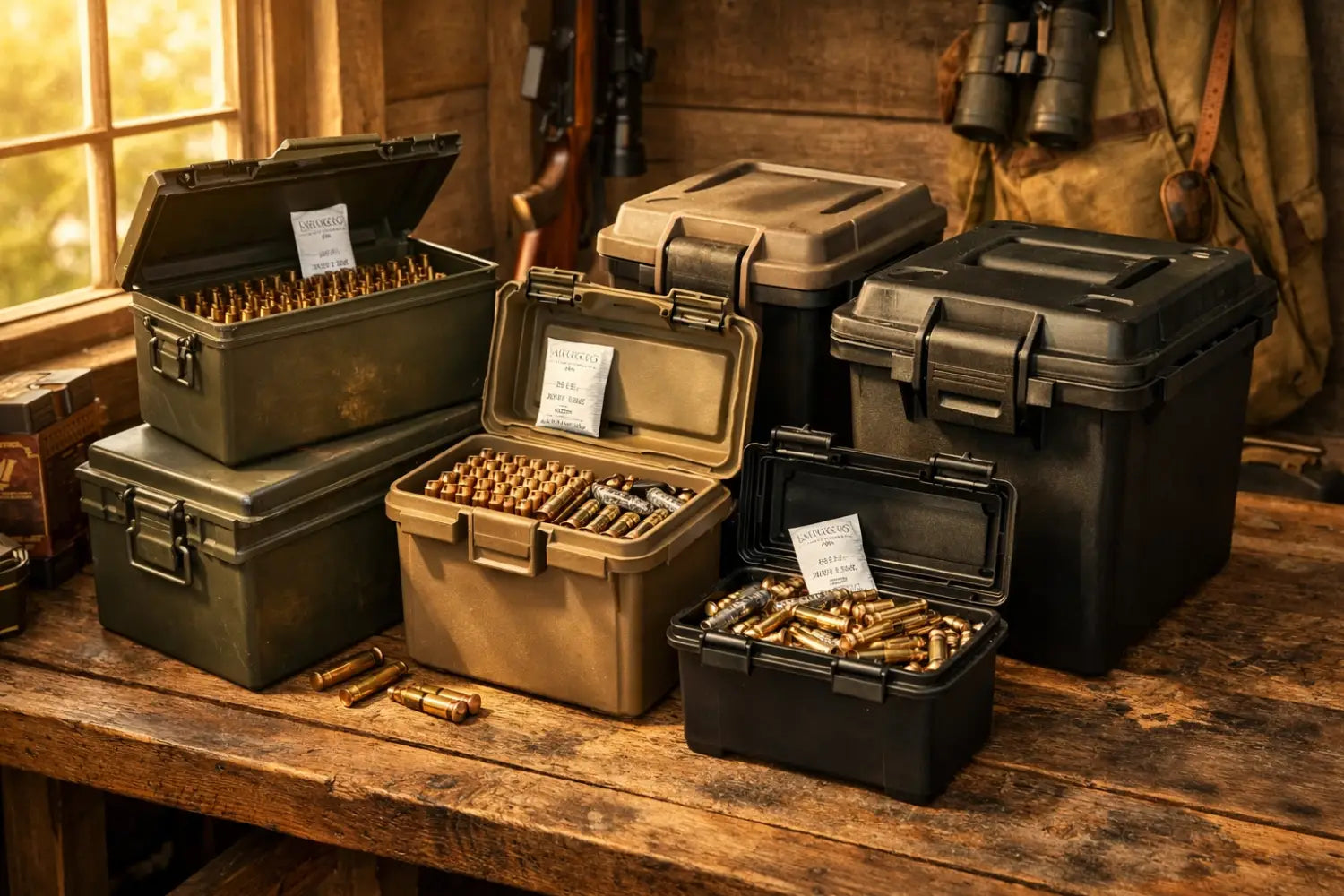
The Fix: Transfer your ammo into airtight containers. Military-style metal cans or heavy-duty plastic ammo cans with o-ring seals are your best bet. Think of it as building an ark for your ammunition: protecting what's valuable from the elements. If you want to keep the original boxes for reference (they do have useful load data), store them inside the sealed containers.
Mistake #2: Ignoring Humidity Control
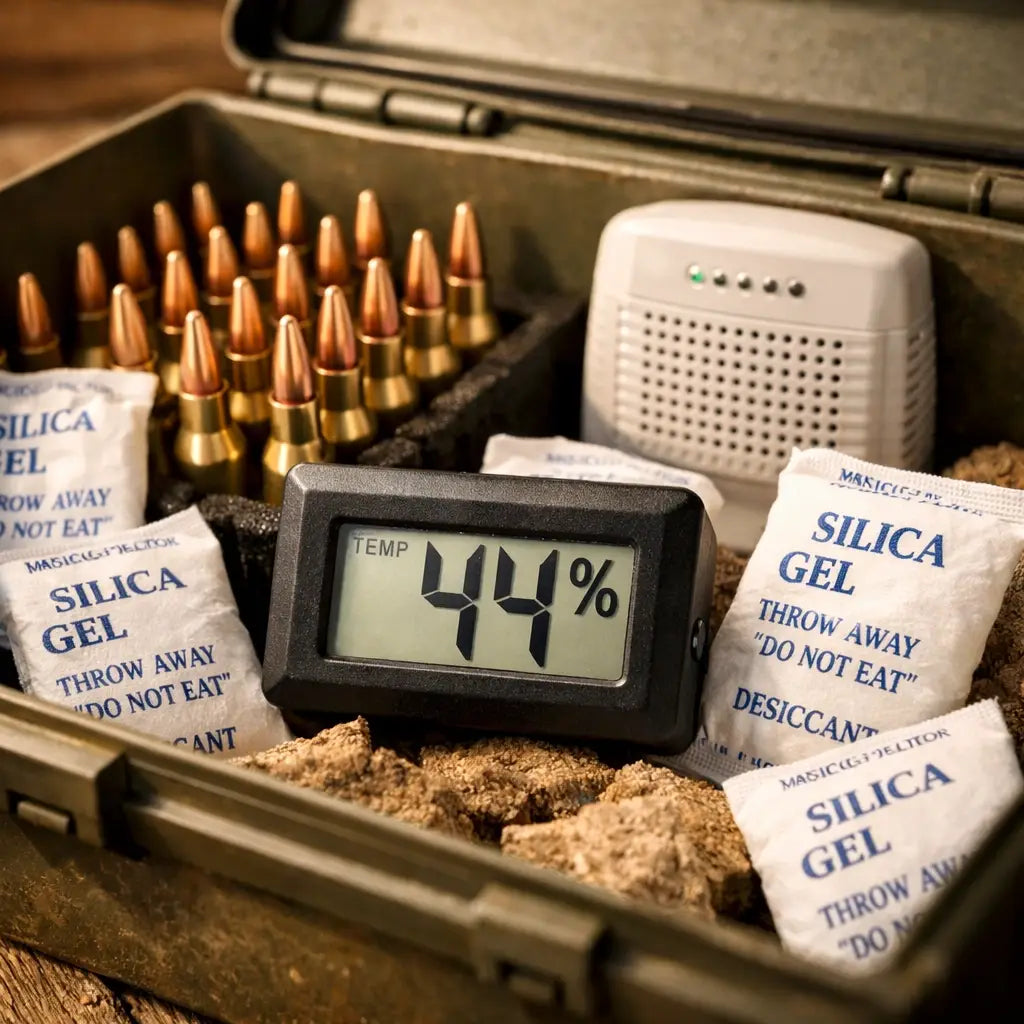
Humidity is the silent enemy of ammunition reliability. If you're storing ammo in a basement, garage, or any space without climate control, moisture is slowly working its way into your rounds. This isn't just about corrosion you can see: it's about internal degradation that affects performance.
The Fix: Aim to keep relative humidity below 50%. Toss silica gel packets into your ammo cans, and if you're in a particularly humid climate, invest in a small dehumidifier for your storage area. Consider it part of your faith-fueled commitment to preparedness: keeping your tools ready for whatever adventure or challenge lies ahead.
Mistake #3: Storing Ammo Where Temperatures Swing Wildly
Your attic gets blazing hot in summer and freezing in winter. Your garage does the same. And every time those temperatures swing dramatically, your ammunition suffers. It's not the heat or cold alone that's the problem: it's the constant cycling between extremes that degrades primers and powder faster than you'd believe.
The Fix: Find a climate-controlled space inside your home. A closet in a spare bedroom, a dedicated gun safe in your living area, or even under your bed beats any outdoor shed or garage. Ideally, you're looking at a consistent 55–75°F. Think of it this way: if you wouldn't want to sleep there, your ammo probably doesn't want to live there either.
Mistake #4: Keeping Loaded Gun Magazines Under Full Spring Tension Indefinitely
There's some debate about this one in the shooting community, but here's the truth: keeping your gun magazine loaded to full capacity for years on end can affect both the magazine springs and potentially the ammunition itself. The constant pressure, combined with environmental factors, isn't doing your rounds any favors.
The Fix: Rotate your magazine loads periodically. If you keep a defensive firearm with a loaded mag, swap out that ammunition every six months or so. Use the rotated ammo for range practice, and load fresh rounds. This creates a natural cycle of refreshment and ensures you're always carrying reliable ammunition. It's good stewardship † in action: using what you have wisely while maintaining readiness.
Mistake #5: Storing Ammo Near Chemicals, Oils, or Solvents
Gun cleaning supplies, automotive fluids, paint thinner: these all have a place in your life, but that place shouldn't be next to your ammunition. Chemicals can seep atmospherically into cartridges (yes, even through sealed containers over long periods), causing corrosion or compromising the powder.
The Fix: Create dedicated, separate storage zones. Your cleaning supplies go in one area, your ammo in another: preferably not even in the same room. When you're organizing your gear, think about creating spaces with purpose and intention. After all, we believe that order and preparation reflect a deeper spiritual readiness.
Mistake #6: Neglecting to Organize and Rotate Your Stock
If you can't remember when you bought that box of .308 in the back corner, you've got a problem. Old ammo sitting unused while you shoot fresh rounds is a waste of resources and potentially leaves you with degraded ammunition when you finally get around to it.
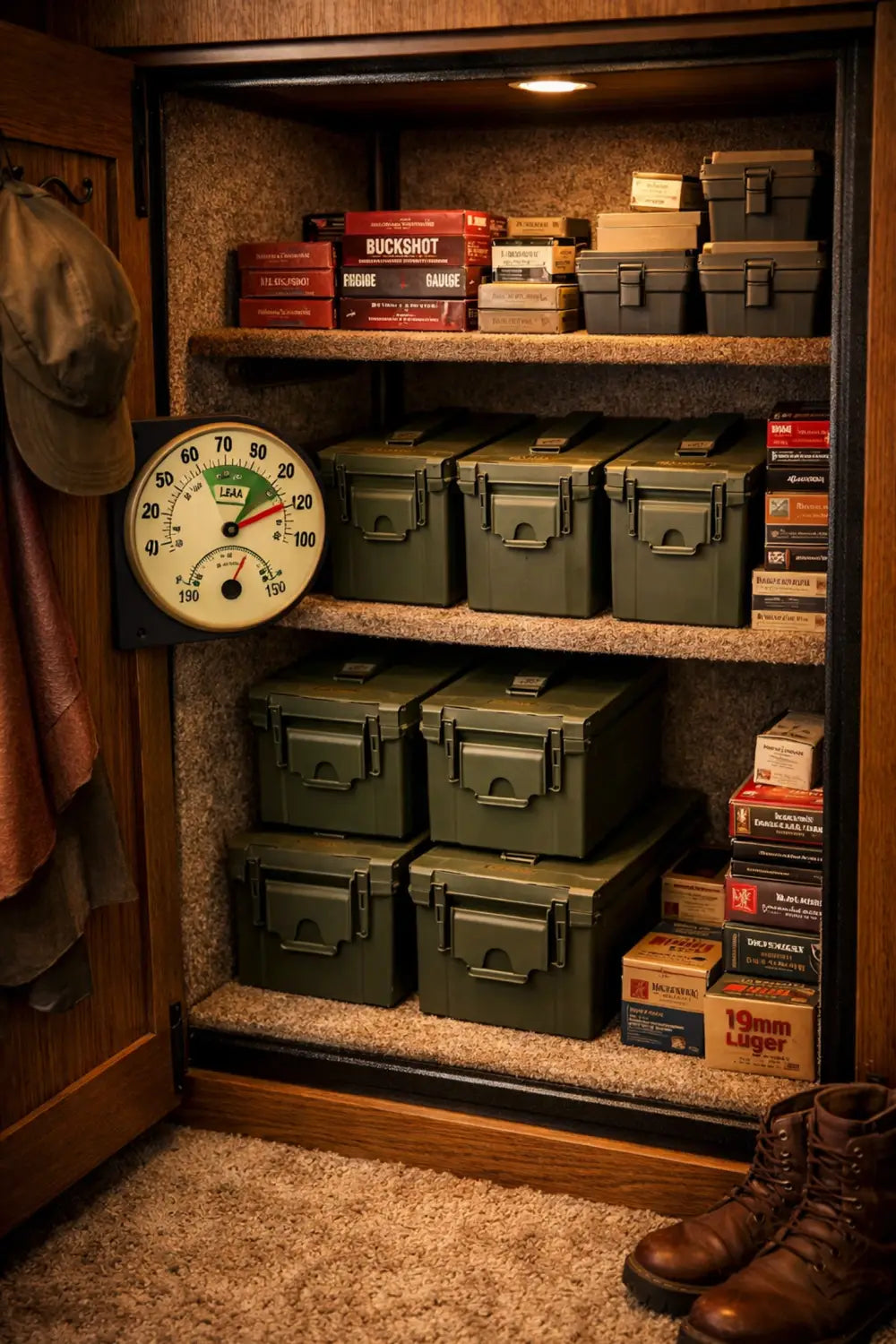
The Fix: Implement a simple FIFO system: First In, First Out. Label your containers with purchase dates, and always shoot the oldest ammo first. Create a basic inventory list so you know what you have and when you got it. This isn't about being obsessive; it's about being a wise manager of your resources. Whether you're stocking quality Hornady rounds or budget practice ammo, use what you have before it loses reliability.
Mistake #7: Storing Ammunition in High-Movement Areas
Your truck bed toolbox seems like a convenient spot, right? Wrong. Ammunition stored in vehicles or other high-vibration areas takes a beating. Those cartridges knock against each other constantly, which can loosen bullets in their cases or cause other structural issues over time.
The Fix: Keep long-term ammo storage in stable, stationary locations. If you need ammunition in your vehicle for a hunting trip or range day, that's fine: just don't leave it there for weeks or months. Pack what you need, use it, and bring the rest back to proper storage. Treat your gear with the same care you'd want someone to treat your truck: with respect and attention to its limitations.
The Bigger Picture: Stewardship Meets Preparation
At Faith & Freedom Outdoors, we believe that proper ammo storage isn't just about following rules: it's about honoring the responsibility we carry as shooters, hunters, and defenders. When we take care of our equipment, we're demonstrating the same principles of stewardship † that guide us in every area of life.
Quality ammunition from brands like Barnes deserves quality storage. Your time on the range or in the field shouldn't be compromised by preventable failures caused by poor storage practices. And honestly? There's something deeply satisfying about opening a well-organized ammo can, knowing that every round inside is ready to perform exactly as designed.
Take an afternoon this weekend to audit your ammo storage. Are you making any of these seven mistakes? If so, don't beat yourself up: just commit to fixing them. Your future self (and your shooting partners) will thank you when everything performs flawlessly.
Because at the end of the day, we're not just storing ammo. We're preparing ourselves to embrace every faith-fueled adventure God places before us, equipped and ready to answer the call.
Stay faithful, stay ready, and store smart.